
Orders
Orders are what your customers ordered. Like quotations, they are usually imported from the ERP; you can also create one by hand with Create order.
The three are linked to each other and to the rest of the CRM: a quotation can belong to a deal and lists the orders raised from it; an order points to its quotation and deal; an invoice points to its order. Quotations and orders also appear on their company's timeline.
The list
Each list opens on the current fiscal year, by quotation, order or invoice date. The columns show the team, the customer, the salesperson, the dates, the net amount and the status as the ERP reports it.
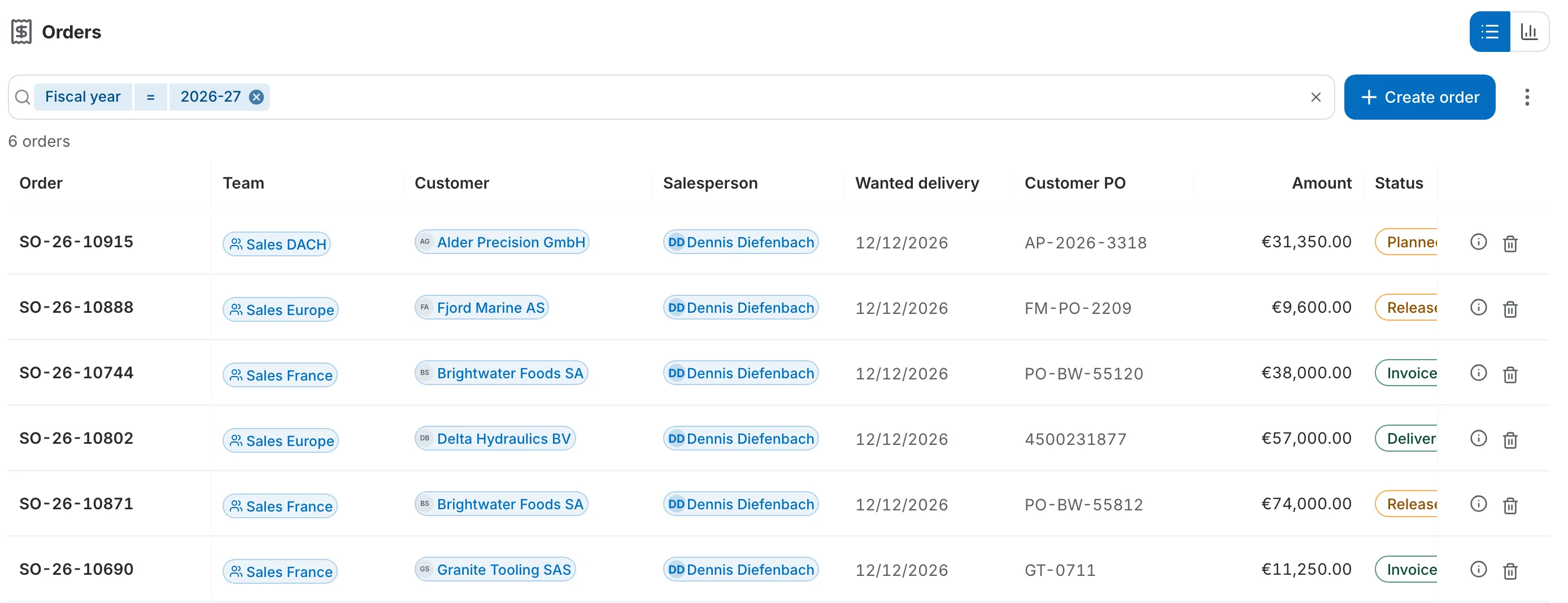
An order whose customer could not be matched to a CRM company is marked Unmatched.
The details panel
Click an order to open it. The Info tab shows the customer, the salesperson, the amounts, the quotation and deal it comes from, the status, the order and delivery dates, the site and the currency. Lines lists what was ordered; further tabs hold the amounts, shipping, invoicing, details and owner.
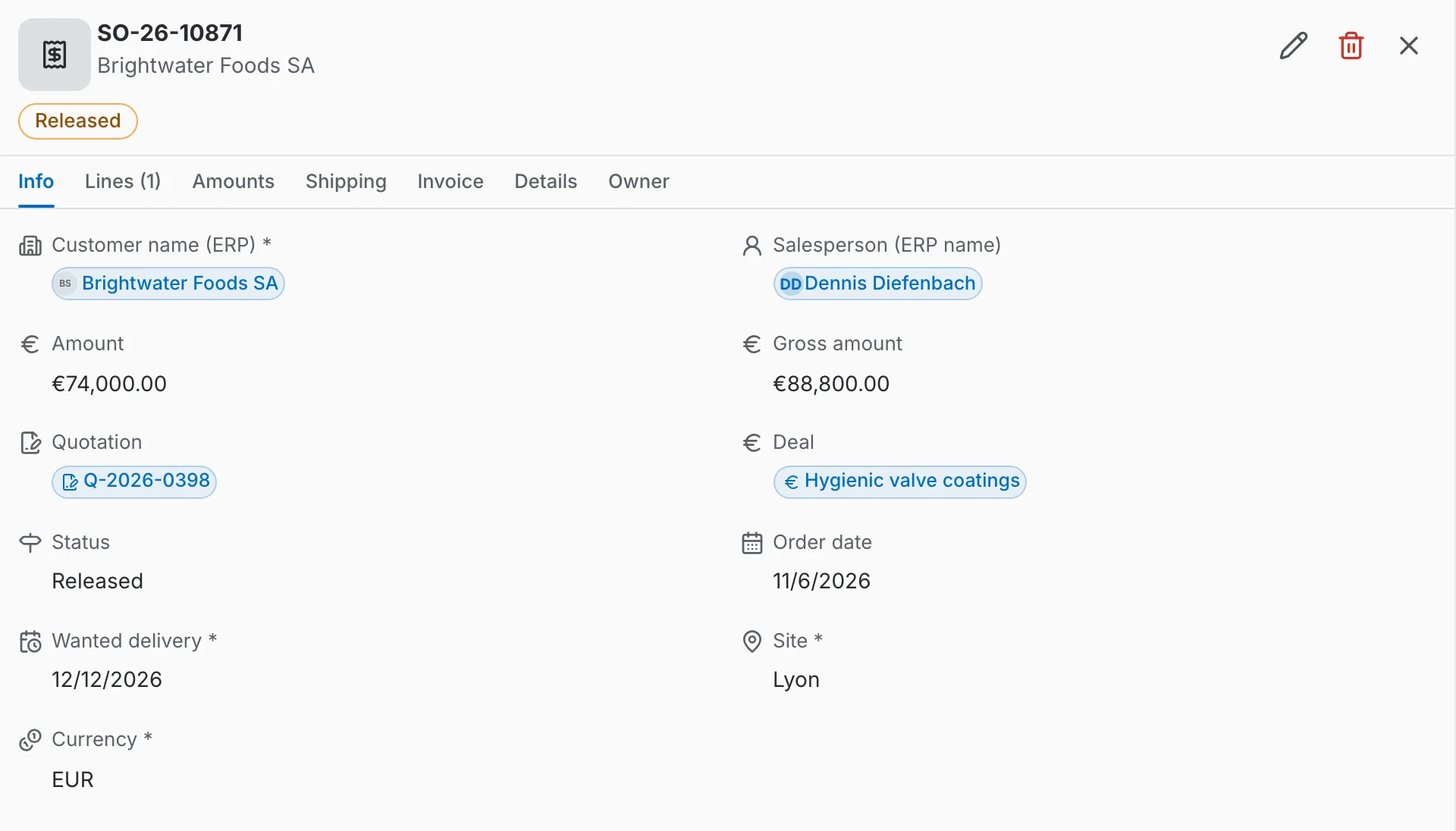
Documents imported from the ERP have an Open in IFS (or Open in ERP) button that opens them there.
Deleting an order only removes it from the CRM: the ERP record is not affected, and the next import brings it back.
Analytics and custom breakdown
Switch to the Analytics view with the chart button at the top right. It shows the number of orders, the amount booked (net of tax, summed from the order lines), the average order and the orders not yet matched to an account, with the amount booked per month, the top customers and the orders per status.

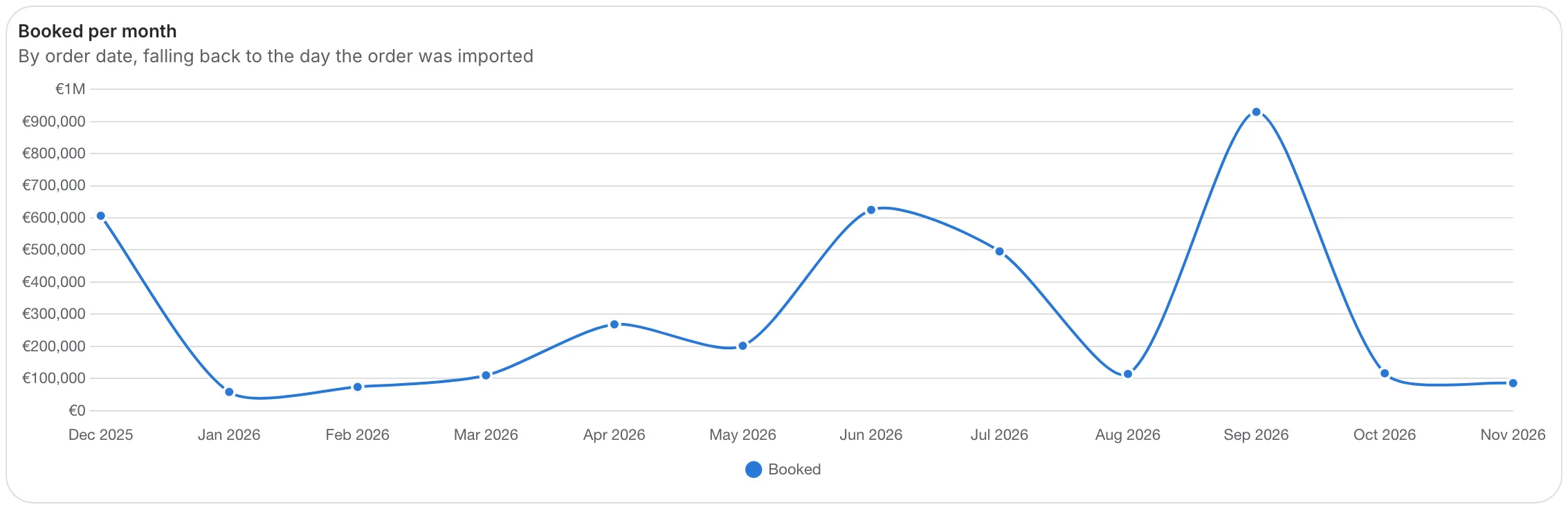
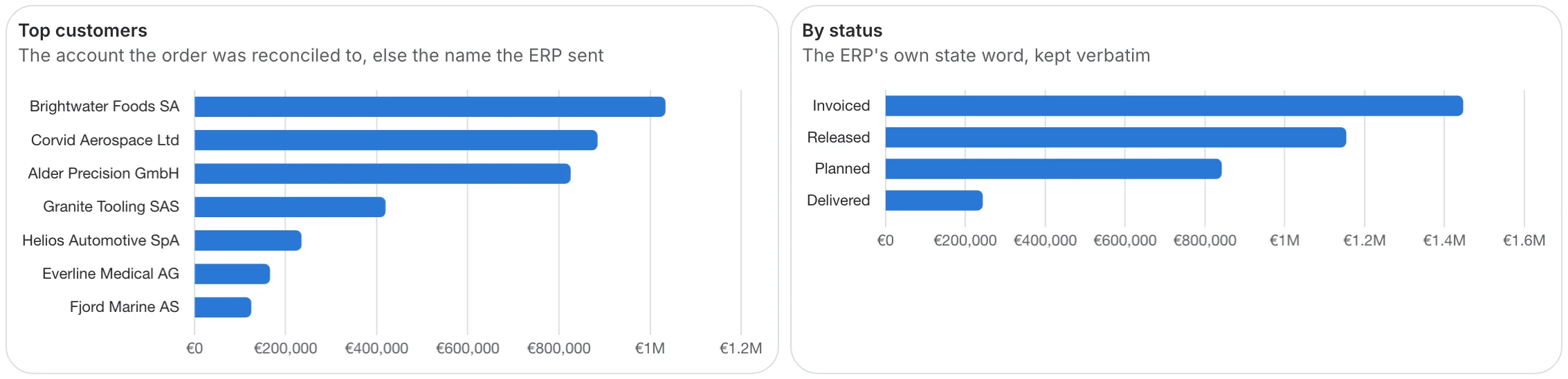
The Custom breakdown answers your own question. Choose what goes in the Rows (for example the account), the Columns (a date per year, quarter or month, or another field, or No split) and the Measure:
Measures: the number of orders, the amount booked and the average order.
Click any figure to open the list of the documents behind it.